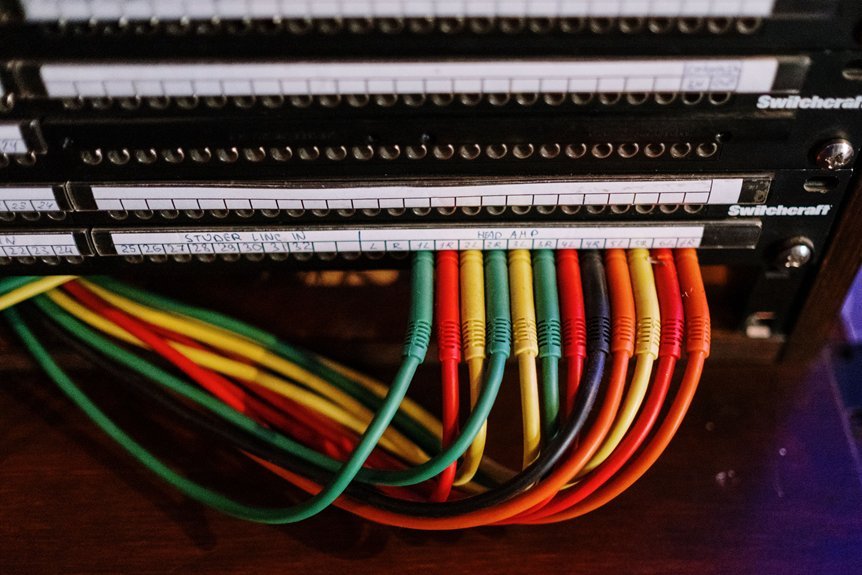
Everything About Rocksmith Real Tone Cable Alternative in One Complete Guide
The guide surveys how a dedicated USB setup can unify audio, data, and routing for Rocksmith-style play, contrasting it with direct cables. It weighs USB audio interfaces, DIY solutions, budget options, and Bluetooth approaches, noting trade-offs in latency, compatibility, and power delivery. Practical guidance covers buffer tuning, drivers, and interference management, aiming for portable, reliable sessions. It concludes with decision factors that leave the reader weighing practical paths and potential compromises to pursue next.
What the Rocksmith Real Tone Cable Replaces (and Why It Matters)
The Rocksmith Real Tone Cable substitutes a traditional guitar-to-PC/console interface with a purpose-built USB connection that carries both audio and signal data.
It replaces a standard studio workflow by streamlining integration and portability.
This design supports a replaceable studio role, enables latency experiments, and clarifies how dynamics influence tone, response, and performance expectations for freedom-seeking players.
Practical Alternatives: USB Audio Interfaces vs. Direct Guitar Cables
Are USB audio interfaces really necessary for Rocksmith-style play, or can a direct guitar cable suffice in most setups?
USB offers lower latency, better input protection, and multi-ins/outputs, but simple play can use a cable.
The choice hinges on headphones vs. speakers experience and app based routing, balancing portability with reliability and desired audio routing flexibility.
DIY, Budget, and Bluetooth Options: Trade-Offs and Setups
DIY, budget, and Bluetooth options present a spectrum of trade-offs for Rocksmith-style setups.
The analysis weighs affordability against reliability, noting that diy budget routes often favor simplicity but may sacrifice consistency.
Bluetooth options offer wireless freedom yet can introduce latency or interference.
Practitioners should map needs to constraints, prioritizing core performance while recognizing the value of flexible, budget-conscious experimentation.
Compatibility, Latency, and Best Practices for Smooth Sessions
In dealing with compatibility, latency, and best practices for smooth sessions, the focus shifts from broad setups to how components interact in real time. USB interfaces matter for driver compatibility and power delivery, while latency optimization hinges on buffer sizes, sample rates, and driver efficiency. Clear benchmarking, minimal processing, and disciplined cable management support consistent, responsive play without interference or delays.
Frequently Asked Questions
How Do I Choose Between 24-Bit Vs 16-Bit Audio for Rocksmith?
To choose 24 bit vs 16 bit, consider desired audio fidelity and headroom; 24-bit offers higher dynamic range for quieter passages, while 16-bit suffices for standard Rocksmith sessions. The choice reflects personal preference and acceptable data footprint.
Can I Use Wireless Options With Rocksmith Without Latency Issues?
Wireless options with Rocksmith can cause latency; avoidable only with low-latency adapters. The analysis notes wireless latency and bluetooth interference as risks, recommending wired connections for accuracy and freedom, while considering specialized, latency-focused wireless gear.
Do Third-Party Cables Affect Tone Accuracy or Impedance Matching?
Third party cables can influence tone accuracy due to impedance and shielding variations. They may introduce subtle changes, so an analytical reviewer notes potential mismatches; however, for many players the differences are minor, yet still relevant to tone accuracy.
What Are Common USB Port Bandwidth Limits Impacting Performance?
A case study shows a user hitting Rocksmith latency when USB bandwidth maxes at 480 Mbps (USB 2.0). Common USB bandwidth limits affect timing, so performance degrades as data transfers compete, reducing precision and increasing perceived latency.
Is There a Recommended Setup for Multi-Instrument Testing?
A recommended setup for multi-instrument testing involves a centralized interface, separate DI/hi-Z channels, and synchronized clocking. Key setup considerations include bandwidth allocation, stable drivers, and impedance matching to minimize crosstalk and latency during testing.
Conclusion
The guide concludes that the Rocksmith setup hinges on reliable signal integrity, latency control, and adaptable routing, whether via USB interfaces, direct cables, or DIY solutions. By weighing practicality, compatibility, and power needs, players can tailor a stable workflow. Anachronistically, it judges latency like a sundial in a data-center: rulers of time, not merely speed. In short, thoughtful choices and disciplined tuning yield smooth sessions and portable, flexible play.